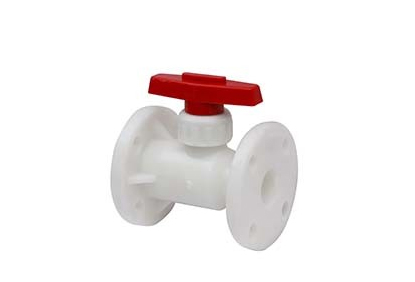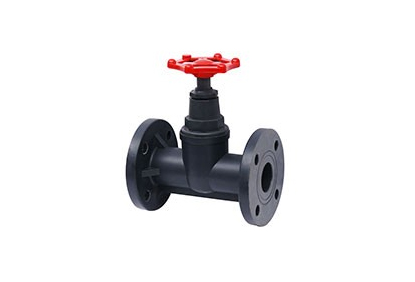


1. The difference between gate valve and globe valve:
Both can be turned off, and in situations where linear flow requirements are not high, flow can be adjusted. However, due to its structural characteristics, globe valves have high flow resistance, so gate valves are more commonly used in areas where throttling is required.
2. About Check Valve
A check valve is a valve that automatically closes by the flow of the medium itself, preventing the medium from flowing back. Also known as check valve, one-way valve, reverse flow valve, and back pressure valve.
3. Regarding the service life of materials
Materials such as FRPP, PPH, UPVC, CPVC, etc. are properly maintained and have a service life of five to six years without pollution.
PVDF material is 40 years old. In general, products used in conventional industrial and mining industries have a lifespan of 18 months.
4. Regarding Negative Pressure
Soft sealed valves cannot withstand negative pressure and are prone to tearing the seal. The sealing material can be used under negative pressure conditions.
5. PVC series products have peeling on the surface
Due to the weak material fusion of PVC series products, the molding temperature and decomposition temperature are close during the injection molding process, which requires extremely high temperature control. Therefore, each injection molding machine is equipped with a cooling fan for cooling and temperature reduction treatment. However, injection molded products are affected by temperature, pressure, and time: the injection molding time is slightly longer, and the cold material (the raw material that enters the mold cavity for injection molding is heated by the electric heating coil in the feeding cylinder, and its temperature is controlled at around 180 ℃) will have excess material entering the product. The cold material mold itself cannot withstand too much cold material, and the excess cold material entering the product has insufficient cooling time and high mold temperature, which are also influencing factors. Therefore, it is inevitable that the PVC product after injection molding will have a small amount of peeling phenomenon.
6. FRPP gray snow pattern, embossed pattern
During the secondary pressurization of embossing, excessive pressure leads to the formation of texture on the surface of the product. Single boost products, due to the thick valve body structure, have many air holes after cooling, and the valve body is prone to sinking. After secondary pressurization, the product becomes more sturdy and tight.
Snowflake pattern on the surface of FRPP material
Pure PP material does not have such a situation. The injection molding of FRPP products is made of FRPP raw materials and reinforced fiberglass particles, which are mixed in proportion before injection molding production. The fiberglass distribution is uneven, and the surface of the valve body will form snowflake patterns when aggregated. If PP raw materials and fiberglass particles are granulated, this phenomenon can be avoided.
7. Difference between metric and imperial systems
The metric system is measured in units such as meters, centimeters, or millimeters, while the imperial system is measured in units such as inches or feet.
Metric threads are represented by pitch, while English threads are represented by the number of threads in US inches.
Metric threads have a 60 degree equilateral profile, British threads have an isosceles 55 degree profile, and American threads have a 60 degree profile.
8. The difference between butterfly valve handle and turbine
The handle of the butterfly valve directly drives the valve disc with the handle rod, which opens and closes quickly but requires a lot of effort. The turbine butterfly valve is driven by the turbine valve disc, which opens and closes slowly but effortlessly; So when the pressure inside the pipe is high, the handle butterfly valve is particularly laborious.
The commonly used butterfly valves in engineering are generally turbine butterfly valves, because in addition to labor-saving, their sealing is better than handle butterfly valves, especially in environments with high switching frequencies, and their service life is longer than handle butterfly valves.
9. About gas
Our valves are mainly used for liquids, air molecules, and water molecules with different densities. It is not recommended to use butterfly valves for gases. In addition, our company has 5 materials with weak airtightness, and it is not recommended to use gas.
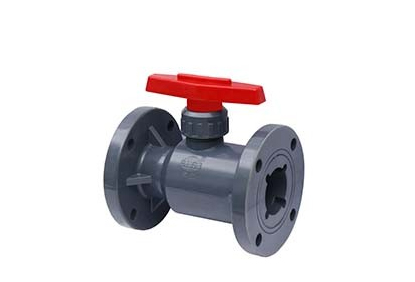
10. Installation matters of flange ball valve
The design structure of our Judicial Lan ball valve is based on the principle of inlet thread design, which facilitates the maintenance of the ball and valve stem. When installing such valves, they should be in the closed state (with the valve stem at a 90 ° angle to the valve body) to avoid problems caused by improper installation such as handle slippage and valve stem fracture due to the compression of the sealing gasket and the inability of the ball to operate normally under pressure.
Based on the operational situation over the years, the following summary is made regarding valve damage caused by incorrect installation by users:
1、 Preferred connection between flat flange and flange ball valve
2、 Preferred full plane flange rubber gasket
3、 Tighten the flange screws when the valve is in the closed state
4、 When tightening screws, pay attention to the average force in each direction, and do not apply too much force. The degree of deformation of the flange surface should be taken as the standard, and the tightness of the metal valve should not be used as the standard.