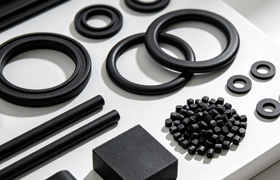

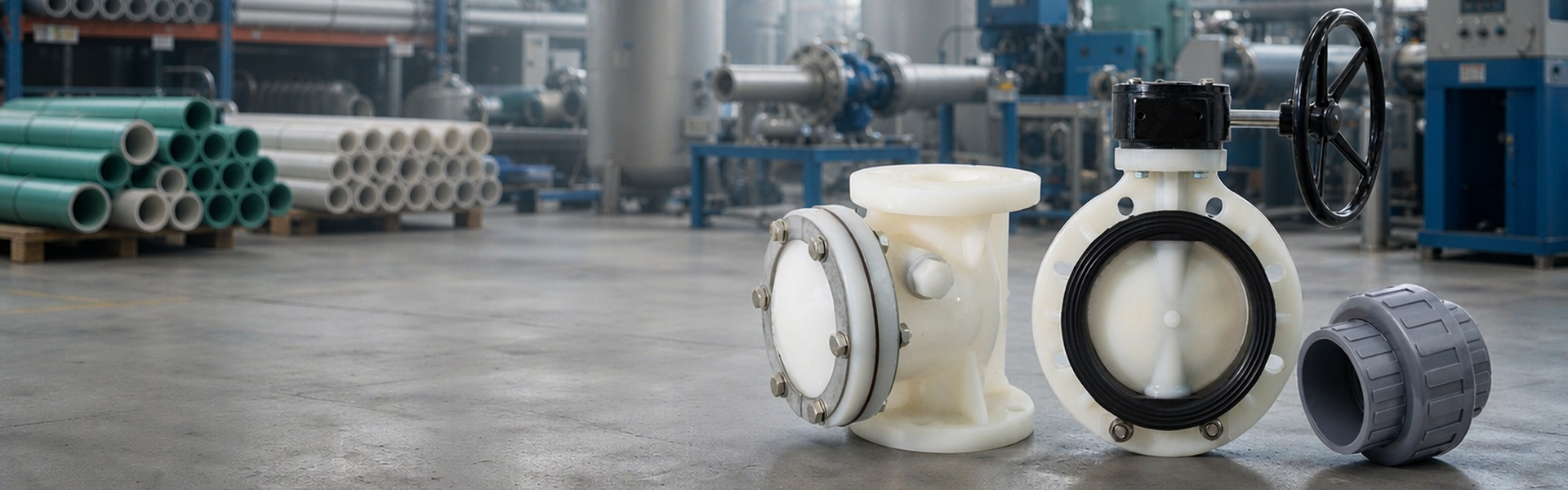
FRPP, or glass-fiber reinforced polypropylene (also referred to as RPP), is a polypropylene composite reinforced with glass fiber. It boasts superior rigidity and outstanding dimensional stability with minimal risk of deformation. When operated under rated temperature and pressure, it delivers a service life of up to 50 years.
Its thermal conductivity is only 1/200 that of steel pipes, granting it excellent heat resistance and thermal insulation properties. It provides highly reliable connections with exceptional joint strength. This material features excellent resistance to corrosion, high temperatures and high pressure. It is hygienic, non-toxic and fully recyclable. It is widely used for conveying corrosive industrial media (such as acidic and alkaline liquids), as well as in municipal water supply and drainage systems.
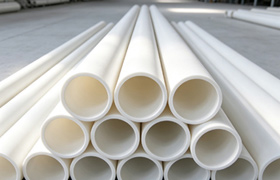
UPVC, also written as PVC-U, is commonly known as rigid PVC. It is an amorphous thermoplastic resin produced by the polymerization of vinyl chloride monomer, compounded with additives including stabilizers, lubricants and fillers. Besides the incorporation of additives, it can also be blended with other resins for modification to achieve desirable practical properties. Such compatible resins cover CPVC, PE, ABS, EVA, MBS and more.
UPVC features high melt viscosity and poor flow characteristics. Its fluidity sees little improvement even with elevated injection pressure and melt temperature. Furthermore, its processing temperature lies very close to its thermal decomposition temperature, resulting in an extremely narrow processing window, which makes UPVC a material that poses challenges for molding.
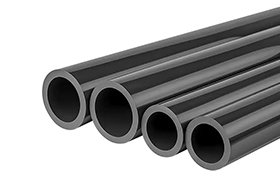
CPVC is a high-performance engineering plastic with broad application prospects. It is produced by the chlorination modification of polyvinyl chloride (PVC) resin. The material appears as white or pale yellow, odorless, non-toxic loose particles or powder.
After chlorination, the molecular chains of PVC gain greater irregularity and polarity. This improves the solubility and chemical stability of the resin and enhances its resistance to heat, acids, alkalis, salts and oxidizing agents. Its mechanical properties and heat-distortion temperature are also upgraded. The chlorine content rises from 56.7% to 63–69%, while the Vicat softening temperature increases from 72–82 °C to 90–125 °C. Its maximum operating temperature reaches 110 °C, with a continuous service temperature of 95 °C. Among commercially available grades, Corzan® CPVC delivers superior performance metrics.
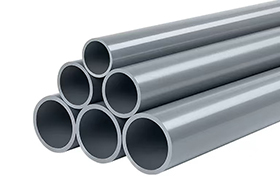
PPH stands for polypropylene homopolymer, also referred to as high-molecular-weight polypropylene. It is a premium material produced by β-modification of conventional polypropylene (PP). This treatment forms a homogeneous, fine β-crystal structure, endowing the material with outstanding chemical corrosion resistance, abrasion resistance, high-temperature resistance, ageing resistance, and electrical insulation properties.
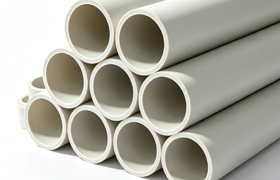
PVDF (polyvinylidene fluoride) appears as translucent or white powder or pellets. It features tightly packed molecular chains and strong hydrogen bonding. It has a limiting oxygen index of 46%, rendering it non-flammable, with a crystallinity of 65–78%, density of 1.77–1.80 g/cm³, melting point of 172 °C, heat-deflection temperature of 112–145 °C, and a continuous service temperature ranging from -40 °C to 150 °C.
PVDF delivers excellent wear and impact resistance, alongside outstanding resistance to fading and ultraviolet radiation even under extremely harsh service conditions. It ranks as the second most widely produced fluoroplastic globally, with an annual worldwide production capacity exceeding 53,000 tonnes.
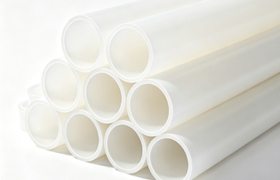
Polytetrafluoroethylene (PTFE, also known under the brand name Teflon®) is widely nicknamed the "King of Plastics". It is a polymer synthesized from tetrafluoroethylene and features exceptional chemical stability, corrosion resistance, sealing capability, low friction, non-stick properties, electrical insulation and outstanding ageing resistance.
As an engineering plastic, PTFE can be fabricated into pipes, rods, tapes, sheets, films and other forms. Its industrial adoption in anti-corrosion applications has greatly driven advances within the chemical sector. PTFE heat exchangers offer favorable heat transfer efficiency, superior corrosion resistance, excellent anti-fouling performance, compact dimensions and low weight. Thanks to technical research and development carried out by Zhengzhou University of Technology, the full potential of PTFE has been further unlocked, making the most of its high performance in corrosion resistance, chemical inertness, wear resistance, toughness and mechanical strength.
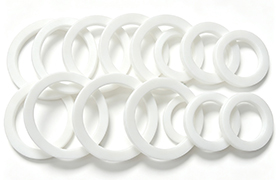
Ethylene propylene diene monomer (EPDM) is a terpolymer of ethylene, propylene and non-conjugated dienes. Owing to the unique structure of the diene monomer, only one of its two double bonds participates in copolymerization. The unsaturated double bond mainly serves as a cross-linking site; the other unsaturated moiety does not form part of the polymer backbone and remains only on the side chain.
The polymer backbone of EPDM is fully saturated. This structural feature endows EPDM with excellent resistance to heat, light, oxygen and, most notably, ozone. EPDM is inherently non-polar, offering good resistance to polar solvents and chemicals, low water absorption and favorable electrical insulation.
Its performance can be tailored during manufacturing by adjusting the diene content, ethylene-to-propylene ratio, molecular weight and molecular weight distribution, as well as the vulcanization process.
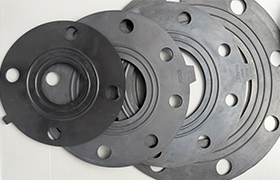
F46, also known as perfluoroethylene propylene (FEP), is a copolymer of tetrafluoroethylene and hexafluoropropylene, with a hexafluoropropylene content of approximately 15%. It is a modified variant of polytetrafluoroethylene.
F46 resin combines properties comparable to PTFE with the favorable processability of thermoplastics. Its maximum continuous service temperature is 200 °C, whereas PTFE can withstand up to 260 °C. Nevertheless, this structural difference gives F46 resin a definite melting point. It can therefore be processed via conventional thermoplastic forming methods, which greatly simplifies processing procedures, an advantage that PTFE does not have.
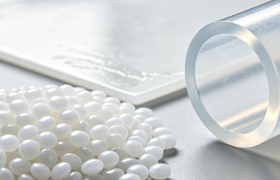
PFA is a copolymer of polytetrafluoroethylene and a minor amount of perfluoropropyl perfluorovinyl ether. It features improved melt cohesion and reduced melt viscosity while retaining nearly all the inherent properties of PTFE. This resin can be directly fabricated into finished parts using conventional thermoplastic molding processes.
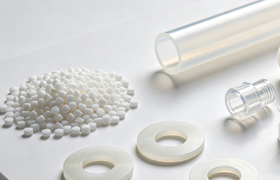
FKM stands for fluoroelastomer, also widely known under the brand name Viton®. It boasts the most balanced overall performance among all synthetic rubbers and is commonly referred to as the “King of Rubbers”.